
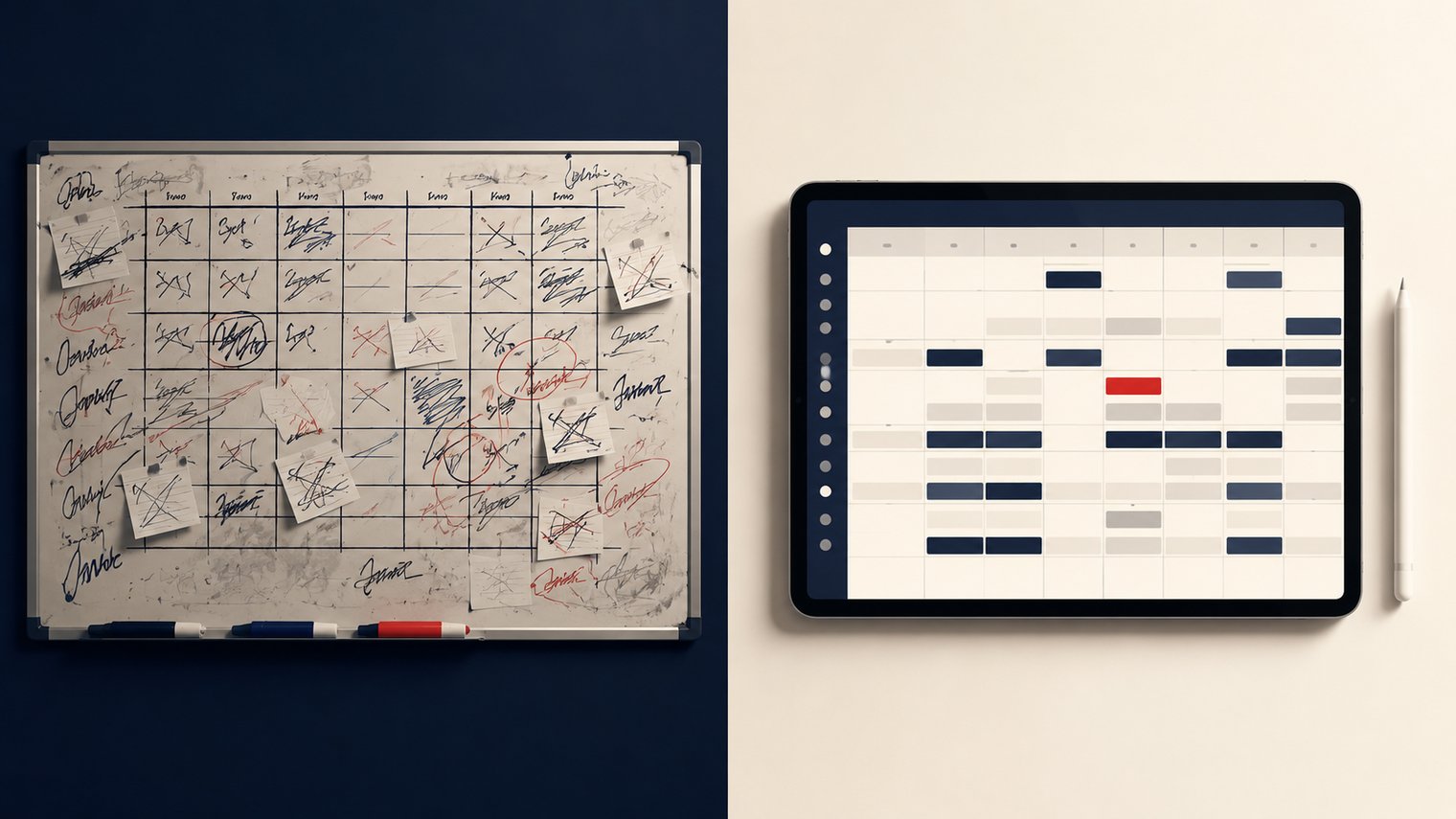
Scheduling a Chick-fil-A® restaurant is its own discipline. These are the highest-volume stores in quick service, staffed heavily with students and part-time Team Members, closed on Sundays, and held to a standard most of the industry does not attempt. A schedule that works at a typical QSR falls apart here by the Friday lunch rush.
This guide covers how Chick-fil-A® Operators and their Teams actually build schedules that hold: the structure, the constraints, and the workflows that keep a shift covered without burning out the leaders who write the schedule.
What makes Chick-fil-A® scheduling different
Six-day weeks, high-volume dayparts. Sunday closure compresses a full week of sales into six days. Breakfast, lunch, afternoon, and dinner behave like different restaurants, each with its own staffing shape. A schedule built on daily totals instead of dayparts overstaffs the slow hours and understaffs the peaks.
A young workforce with real availability constraints. Many Team Members are students. Availability changes with class schedules, sports seasons, and exams. Minor labor rules add hard limits on hours and break timing that vary by state. A schedule that ignores these is not a schedule; it is a list of future call-outs.
Positions are not interchangeable. Front counter, drive-thru, kitchen, and leadership each need specific training. Putting an untrained Team Member on breading during a rush does not fill the slot. Real coverage means the right person, at the right position, at the right time.
The bar is higher. Chick-fil-A® stores run at a pace and standard the rest of QSR studies. The schedule is where that standard starts. Guests never see the schedule, but they feel it within thirty seconds of walking in.
The building blocks of a schedule that holds
1. Start from dayparts, not days
Build each day as a set of dayparts with a target headcount per position. When leaders see the day as six blocks instead of one, coverage gaps become visible before they become Saturday problems.
2. Keep availability current, in one place
Paper notes and text threads lose availability changes. Keep availability in the same system that builds the schedule, so a change a Team Member submits on Tuesday is in front of the leader writing Thursday's schedule.
3. Schedule to training, not just headcount
Track what each Team Member is trained and rated on, and build the schedule against positions. Ten people on the floor with nobody trained on primary is not coverage.
4. Plan breaks into the shift, not around it
Break compliance is easiest when breaks are part of the plan. Schedule them, track them during the shift, and keep the record. This matters double when minors are on the clock, because their break windows are not optional.
5. Publish early, change loudly
A schedule published late guarantees conflicts. A schedule changed silently guarantees no-shows. Publish on a consistent day, and make sure every change notifies the people it affects on their phones.
6. Close the loop after the shift
Compare what was scheduled against what actually happened. Chronic gaps in the same daypart are a forecasting problem, not a Team Member problem. The stores that improve are the ones that look.
What tools do Chick-fil-A® stores use for scheduling?
Most stores run one of a few approaches: spreadsheets and paper, general-purpose restaurant schedulers like HotSchedules, or platforms built specifically for Chick-fil-A® operations.
Spreadsheets work until the roster passes about thirty people, then availability tracking and change management collapse.
General-purpose tools handle shift assignment, but they were built for the whole restaurant industry. The Chick-fil-A® specifics, such as position and training-based placement, daypart structure, and the operational cadence around the schedule, live outside the tool in workarounds. That is why so many store websites maintain their own how-to pages for making generic schedulers fit.
OneClick was built the other way around: for Chick-fil-A® Operators and their Teams first. Scheduling, break management, checklists, training progression, and team chat run in one system, so the schedule connects to training levels and the daily operating rhythm instead of living beside them. It is used daily by 600+ Chick-fil-A® stores and 70,000+ Team Members. And with OneClick Q, our Operational Intelligence layer now in stores through early access, leaders can see the day by daypart, ask questions in plain English, and catch coverage problems before they bite.
Frequently asked questions
What is the best way to schedule a Chick-fil-A® restaurant?
Build by daypart and position, keep availability in the same system as the schedule, schedule breaks explicitly, publish on a consistent day, and notify every change. Tools built for Chick-fil-A® operations make each of those steps the default instead of a workaround.
What scheduling software is made for Chick-fil-A® stores?
OneClick is built specifically for Chick-fil-A® Operators and their Teams, with scheduling, breaks, checklists, training, and recognition in one platform, used daily by 600+ stores. General-purpose options like HotSchedules also run in many stores; they cover shift assignment but leave the Chick-fil-A® specific structure to the store.
How far in advance should a schedule be published?
Pick a consistent publish day and hold it. Consistency matters more than the exact lead time, because Team Members plan around the rhythm. Late changes should always notify the affected Team Members directly.
How do stores handle scheduling minors?
Track birthdates and apply your state's hour and break rules when building the schedule, not after. Keeping minors' constraints inside the scheduling system prevents the Friday-night discovery that a closer cannot legally close.